
By [Jawad Shah] – Finance & Expense Automation Specialist
Nearly 78% of Americans live paycheck to paycheck, struggling with poor money management and financial stress. Many people experience overspending without understanding where their money disappears each month. A budget tracker tool—a digital budgeting solution designed to organize personal finances—becomes essential for monitoring income and expense patterns while helping achieve savings goals.
These personal finance management tools provide real-time expense tracking, automated budgeting tools, financial insights revealing spending patterns, and alerts to help users stay within their budget. Throughout this article, readers will discover the benefits of using a budgeting app and understand why everyone should use a budgeting tool.
ExpenseTrackerTool.com offers an intuitive platform combining all essential features needed to manage money effectively and achieve financial freedom.
The Problem: Financial Challenges Without Using Budget Tracker Tool
Without proper expense tracking, people face numerous challenges preventing wealth building and stability. Overspending affects many individuals living paycheck to paycheck despite decent incomes. The root problem isn’t insufficient income—it’s the lack of financial control over where money goes monthly.
Major Financial Struggles:
Lack of Visibility: Without tracking monthly expenses, people remain unaware of how small purchases accumulate. Daily coffee, frequent food delivery, or impulse shopping can drain hundreds monthly without notice.
Difficulty Saving Money: The inability to identify unnecessary expenses keeps people trapped in financial struggle. Unused subscriptions, redundant policies, or premium services continue draining accounts simply because they go unnoticed.
Financial Stress: When individuals don’t track expenses, they face unexpected shortfalls, leading to anxiety around money and sleepless nights worrying about bills.
Missing Payments: Late fees add up quickly, credit scores suffer, and service interruptions cause inconvenience while creating additional financial burdens.
Stagnant Savings Goals: Whether saving for emergencies, vacations, or retirement, progress remains stagnant without understanding current habits. This lack of budget forecasting prevents informed financial decisions.
| Challenge | Without Tracking | With Tracking |
| Spending Awareness | No idea where the money goes | Clear spending breakdown |
| Savings Progress | Stagnant or declining | Steady, measurable growth |
| Bill Payments | Often missed or late | On time with reminders |
| Financial Stress | High anxiety levels | Peace of mind and control |
What Is a Budget Tracker Tool?
A budget tracker tool is a personal budget planner tool—software or an application—designed to help individuals monitor income and expenses systematically. These digital budgeting solutions revolutionize personal finance management by making it easier to track spending patterns and maintain financial awareness.
Core Functions:
- Automatic Expense Categorization – Sorts transactions into predefined categories
- Spending Breakdown – Shows where money goes monthly
- Custom Budget Alerts – Notifies when limits are approached
- Financial Insights – Provides reports through visual charts
- Real-time Updates – Displays current financial status instantly
Digital vs. Manual Tracking:
Traditional methods require tedious data entry, provide no real-time updates, increase calculation errors, and consume significant time. Modern digital solutions automatically import transactions, calculate totals instantly with perfect accuracy, offer multi-device accessibility, and generate visual reports with a single click.
ExpenseTrackerTool.com operates as a comprehensive financial planning tool, simplifying the entire budgeting process through automated tracking, categorization, notifications, and visual reporting.
Top Benefits of Using a Budget Tracker Tool
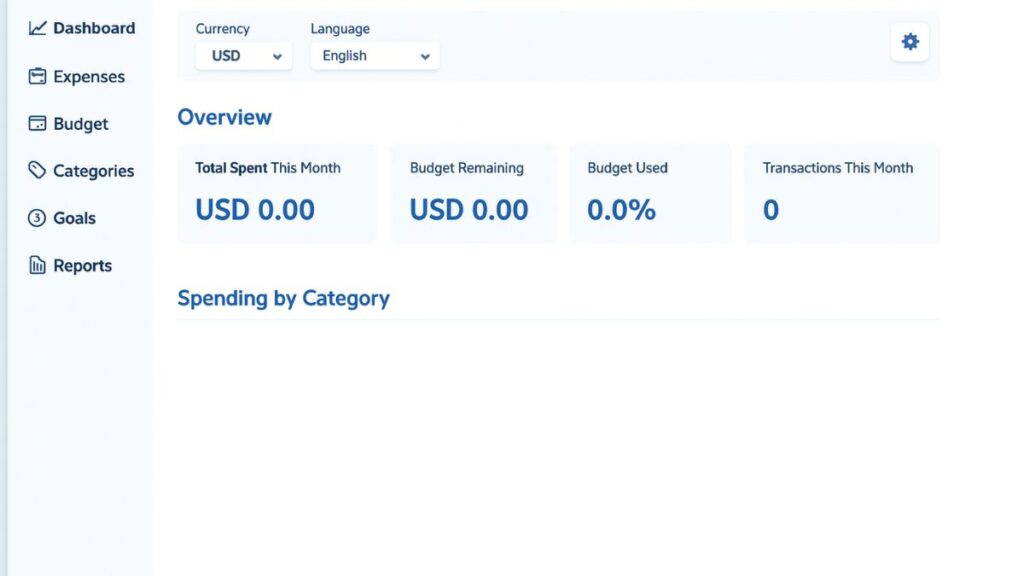
1. Gain Complete Financial Visibility
Budget tracker tools provide a real-time overview of income vs. expenses, eliminating guesswork from financial planning. Users see instant financial snapshots, identify spending patterns, understand category breakdowns, and notice seasonal fluctuations.
Many users discover they’re spending $400+ monthly on dining out when they thought it was only $150. This spending breakdown helps understand where money actually goes, revealing surprising insights about consumption habits.
2. Achieve Financial Goals Faster
These tools accelerate progress by providing structure and accountability. Users set clear targets, monitor progress, calculate timelines, watch visual motivation indicators, and automatically adjust when circumstances change.
For debt reduction, users see principal decreases with each payment, understand interest effects on payoff timelines, stay motivated watching balances shrink, and identify extra funds for acceleration.
| Goal | Without Tracking | With Tracking |
| Emergency Fund | Vague progress | Clear milestones, steady growth |
| Debt Payoff | Feels endless | Visual progress builds motivation |
| Vacation Savings | Uncertain amounts | Know exact monthly needs |
3. Save Time and Reduce Errors
Modern automated budgeting tools eliminate time-consuming manual tracking. Instead of spending hours weekly entering receipts, users benefit from automatic expense categorization, processing transactions instantly.
Time Savings: Recording transactions drops from 15-20 minutes daily to 2-3 minutes (85% reduction). Categorizing expenses reduces from 30 minutes weekly to 30 seconds (95% reduction). Report generation changes from 1-2 hours monthly to 1 minute (98% reduction).
Digital tools perform calculations with perfect accuracy, ensuring reliable financial data for decision-making. Most users spend less than 10 minutes daily managing their budget tracker, making “Is a budget tracker worth it?” easy to answer—time savings alone justify adoption.
4. Make Smarter Spending Decisions
Access to data-driven insights into spending habits transforms financial choices. Instead of emotional decisions, users review actual spending data before purchases.
Budget trackers identify which categories consistently exceed budget, reveal seasonal variations, spot gradual increases, and highlight high-spending patterns. Common unnecessary costs include unused streaming services ($15-50/month), gym memberships when preferring home workouts ($30-100/month), and food delivery fees ($100-300/month).
Strategic planning for large purchases becomes realistic with comprehensive tracking. Users forecast their financial position months in advance and make better money decisions.
5. Reduce Financial Stress
Financial anxiety often stems from uncertainty rather than actual problems. Budget tracker tools provide peace of mind through organized finances, replacing worry with confidence.
Stress Reduction Benefits:
- Eliminates the unknown—users know the exact available amounts
- Prevents costly mistakes through balance monitoring and bill reminders
- Creates emergency preparedness for unexpected expenses
| Stress Source | Without Tracker | With Tracker |
| Unexpected Bills | Panic and scrambling | Prepared with emergency tracking |
| Month-End Money | Anxiety about running out | Clear the remaining budget picture |
| Large Purchases | Worry about affording | Planned savings make it stress-free |
6. Improve Financial Discipline
Accountability through regular tracking naturally improves financial habits. People think twice before making unnecessary purchases when expenses appear in their budget tracker, creating a built-in deterrent without requiring willpower.
Progressive habit development occurs over months: initial awareness (weeks 1-2), conscious adjustment (weeks 3-8), habit formation (months 3-6), and lifestyle integration (months 6+). Behavioral changes develop, including checking budgets before shopping, comparing prices habitually, and prioritizing needs over wants automatically.
Over time, consistent tracking develops healthier money habits that become automatic. This transformation compounds over the years into substantial wealth and security.
Who Should Use Budget Tracker Tools?
Budget tracker tools benefit virtually everyone regardless of age, income level, or financial situation:
- Young Professionals – Establish habits early, prevent debt accumulation, and build wealth faster
- Families – Coordinate finances between partners, teach children money management
- Freelancers – Smooth income volatility, understand average earnings, build emergency funds
- Goal Savers – Transform aspirations into concrete action plans with measurable progress
- Debt Reducers – Maintain motivation through visible progress, identify extra payment opportunities
- Retirees – Ensure funds last throughout retirement, track healthcare costs, and manage withdrawals
Universal Truth: Anyone wanting to improve their financial situation should use a budget tracker tool. Financial success doesn’t require high income—it requires understanding where money goes and making intentional spending decisions.
Common Myths About Budget Tracking
Myth #1: “It’s Too Time-Consuming”
Modern automated budgeting tools eliminate this concern. Transactions import automatically, categorization happens instantly, and reports are generated with a single click. Most users spend less than 10 minutes daily—hardly significant compared to the financial benefits gained.
Myth #2: “I Don’t Make Enough Money to Budget”
Budget tracking is especially valuable for those with limited resources who cannot afford mistakes. Every dollar must be optimized when money is tight. Knowing where money goes prevents running out before the month’s end.
Myth #3: “Budget Tools Are Complicated”
Today’s best budget tracker tools prioritize user experience, offering intuitive interfaces requiring no financial expertise or technical knowledge. If someone can use social media or check email, they can use a modern budget tracker.
Myth #4: “Budgeting Means I Can’t Enjoy Life”
Budget tracking actually enables more guilt-free enjoyment by ensuring discretionary spending fits within financial capacity. Financial discipline creates freedom rather than restriction. People with budgets often enjoy life MORE because they can spend on what matters without constant financial anxiety.
Conclusion
The benefits of a budget tracker tool include providing comprehensive financial visibility, accelerating goal progress, saving valuable time, enabling smarter decisions, reducing financial stress, and improving long-term financial discipline.
Understanding why to use a budgeting app comes down to recognizing that financial control is impossible without clear information about income and expenses. Whether living paycheck to paycheck or building wealth, a money tracking system provides the foundation for success.
ExpenseTrackerTool.com offers a proven solution combining automatic expense tracking, real-time financial insights, custom budget alerts, visual reports, multi-device access, and bank-level security in an accessible, user-friendly platform.
Financial freedom is an achievable reality for anyone willing to improve financial discipline through consistent tracking. Taking control of your financial future begins with a single step: starting to track spending today. Every day without visibility is a day when money potentially flows toward low-value expenses instead of meaningful goals.
Start today. Your future self will thank you.
FAQs
Q: Why should I use a budget tracker tool?
A: A budget tracker tool helps you monitor income and expenses in real time, giving you better control over your personal finances. It improves financial discipline and helps reduce unnecessary spending.
Q: How does a budget tracker tool improve money management?
A: It categorizes your expenses, tracks spending patterns, and provides financial insights so you can make smarter budgeting decisions. This leads to better saving habits and long-term financial stability.
Q: Can a budget tracker tool help me save more money?
A: Yes. By showing where your money goes and identifying overspending, a budgeting app helps you cut unnecessary expenses. It also supports setting and achieving clear savings goals.
Q: Is a budgeting app worth using for beginners?
A: Absolutely. Budget tracker tools simplify personal finance management with easy-to-use dashboards and automated expense tracking. Beginners can quickly build better money habits.
Q: What features should I look for in a budget tracker tool?
A: Look for real-time tracking, bank syncing, expense categorization, savings goal options, and spending alerts. These features make financial planning easier and more accurate.
Q: How do budget tracker tools reduce financial stress?
A: They give you a clear overview of your monthly spending and upcoming bills. This helps you stay within your budget, avoid overspending, and live with more confidence and financial control.
Q: Are budgeting apps safe to connect with my bank account?
A: Most reputable budgeting tools use bank-level encryption and secure authentication. Always choose trusted apps with strong privacy and data protection policies.
Q: Can a budget tracker help me break the paycheck-to-paycheck cycle?
A: Yes. By analyzing spending habits and guiding you toward smarter money decisions, an expense tracker helps you organize finances and build savings—reducing reliance on each paycheck.
Q: Do budget tracker tools work for household budgeting?
A: Definitely. Household budgeting apps allow you to track shared expenses, monitor bills, and set joint financial goals—keeping everyone aligned and organized.
Q: What’s the main benefit of using a digital budgeting tool instead of manual tracking?
A: Digital tools automate expense tracking, provide instant spending insights, and minimize human error. This saves time and boosts accuracy compared to manual budgeting.

Finance & Expense Automation Specialist With 3 years of experience.